
To perform a reliable zeta potential test, you need to follow a systematic approach that guarantees accuracy and reproducibility electrophoretic mobility. Start by selecting the right diluent and achieving the correct concentration for your sample. Proper sample preparation is vital, as even minor inconsistencies can affect your results. With the right equipment and methodology in place, you can obtain valuable insights into your sample’s stability and behavior in various environments. Understanding these steps is fundamental for successful testing.

Understanding Zeta Potential and Its Importance
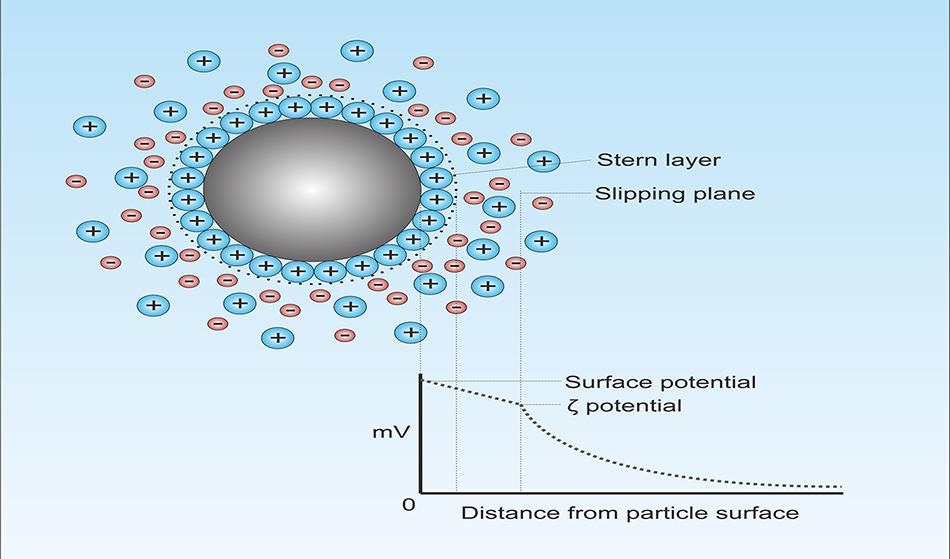
Zeta potential is a critical parameter in colloidal chemistry that quantifies the electrical charge at the interface of particles in suspension.
Understanding the importance of zeta potential is essential for predicting particle stability, as it influences aggregation and sedimentation behavior. A high zeta potential indicates a stable dispersion, while a low value suggests potential flocculation.
The applications of zeta are extensive Lab Alliance, ranging from pharmaceuticals, where it guarantees drug stability and efficacy, to wastewater treatment, where it aids in determining the effectiveness of coagulation processes.
Equipment and Materials Needed for Testing
To accurately measure zeta potential and assess colloidal stability, you’ll need specific equipment and materials tailored for this purpose.
Start with a zeta potential analyzer, which performs electrokinetic measurements to determine the charge of particles in suspension. Make sure it’s capable of measuring various particle sizes, as this can greatly affect your results.
You’ll also require a sample holder, often designed for specific cuvettes or cells, to maintain consistent conditions during testing. A high-quality sonicator may be necessary to disperse your sample effectively, guaranteeing uniformity.
Finally, consider a particle size analyzer to complement your zeta potential measurements, as knowing the dimensions of your particles can provide critical context for interpreting your zeta potential results.
Sample Preparation for Zeta Potential Measurement
When preparing samples for zeta potential measurement, maintaining uniform particle dispersion is vital for obtaining reliable results.
Begin by selecting an appropriate diluent that matches the ionic strength of your sample. Use sample dilution to achieve a concentration that’s ideal for measurement; excessively concentrated samples can lead to aggregation, skewing your results.
Employ techniques like sonication or vortexing to enhance particle dispersion, guaranteeing a homogenous suspension. Allow the sample to equilibrate before measurement to facilitate stable interactions among particles.
It’s essential to monitor pH, as it can greatly influence zeta potential values. Proper sample preparation not only enhances the accuracy of your zeta potential measurement but also guarantees that your data is reproducible and reliable across multiple tests.
Performing the Zeta Potential Test
The process of performing a zeta potential test involves utilizing an instrument that measures the electrophoretic mobility of particles in your prepared sample.
Begin by carefully following your established test procedures, guaranteeing the sample is placed in the measurement cell without bubbles.
Next, set the appropriate voltage and temperature conditions, as these parameters greatly influence data accuracy.
Start the measurement, allowing the instrument to record the particle movement.
It’s essential to perform multiple runs to enhance reliability.
After completing the tests, verify that the data is systematically documented, as this will facilitate future comparisons.
Consistency in your approach will assure that you consistently achieve accurate and reproducible results, making your findings more credible and useful in practical applications.
Analyzing and Interpreting the Results
Once the zeta potential measurements are complete, it’s time to analyze and interpret the results to understand the stability and behavior of your colloidal system.
Begin by evaluating the magnitude of zeta potential values; generally, higher absolute values indicate greater stability. Negative or positive values signify the nature of charge, impacting particle interactions.
Use data visualization techniques, like graphs, to present your findings effectively, allowing for clearer comparisons and trends. Look for patterns that correlate with your experimental conditions, focusing on result significance.
A stable colloidal system typically has a zeta potential greater than ±30 mV, while values between ±10 to ±30 mV suggest instability. Consequently, careful analysis aids in predicting the performance and longevity of your formulation.
Best Practices for Accurate Zeta Potential Testing
To guarantee accurate zeta potential testing, it’s essential to meticulously prepare your samples and equipment. Start by ensuring your sample concentration is ideal; too high or too low can skew results. Use standardized measurement techniques to maintain consistency across tests.
Calibrate your equipment regularly to enhance data reliability and minimize systematic errors. Control environmental factors like temperature and pH, as they greatly influence zeta potential readings.
When performing the test, replicate measurements to confirm reproducibility and validate your results. Finally, analyze your data with appropriate statistical methods to assess variability.
Conclusion
To sum up, performing a reliable zeta potential test requires meticulous attention to detail throughout the process. By selecting the right diluent, achieving the correct concentration, and ensuring proper dispersion, you set the stage for accurate measurements. Consistent methodology, including multiple test runs, enhances the reliability of your results. By following these best practices and systematically analyzing your findings, you can draw meaningful conclusions that contribute to your understanding of particle behavior in various applications.